Design Doha 2026: The Biennial Moves into the City
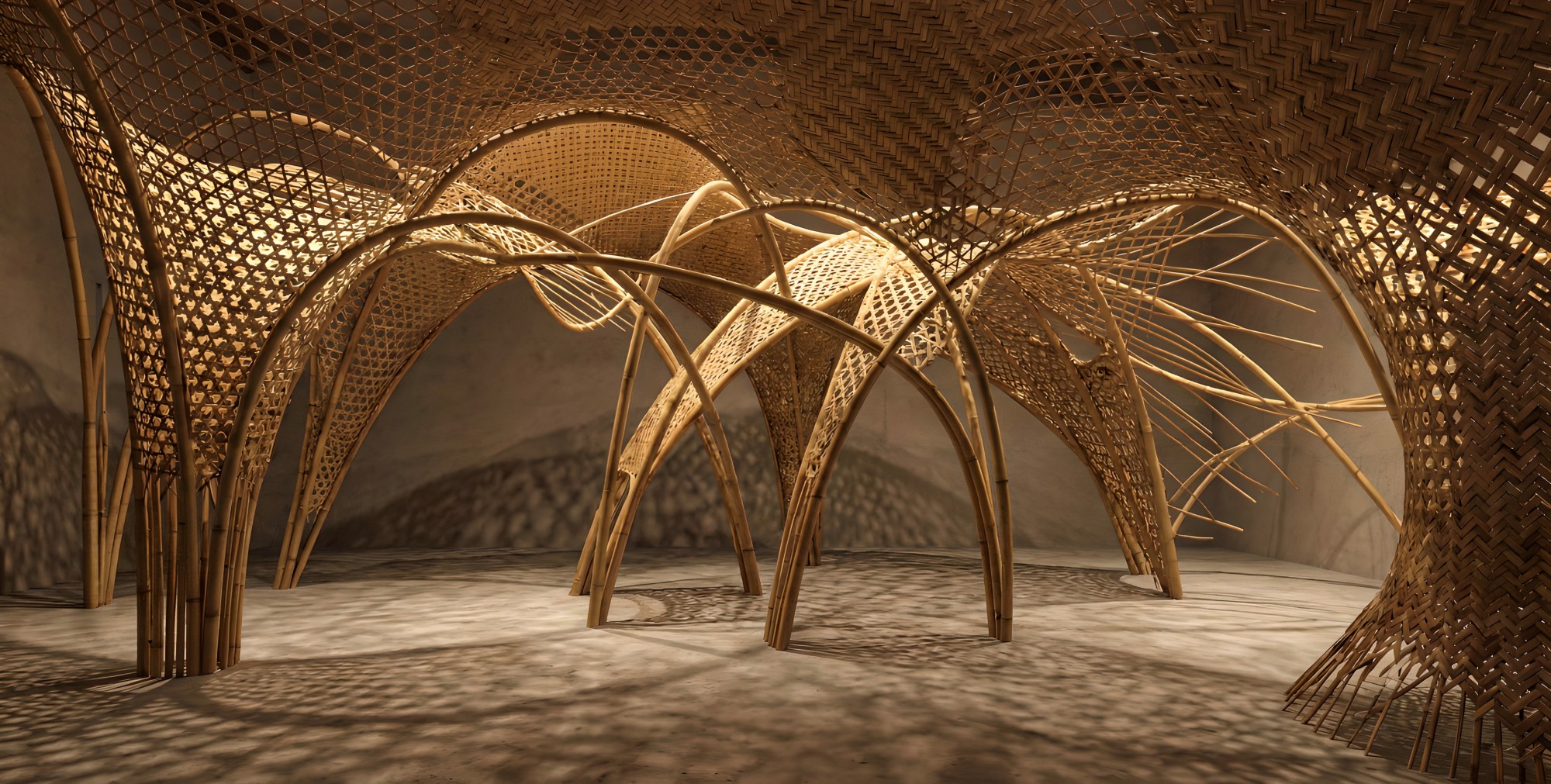
With more than 15 exhibitions, over 100 designers and studios, new public commissions and Fereej Al Asmakh emerging as a central hub, the second edition of Design Doha looks beyond the conventional design biennial to ask how design can inhabit, and perhaps reshape, a city.
W
hen Design Doha returns for its second edition this November, it will be considerably larger than the biennial that made its debut in 2024. But perhaps the more interesting shift is not simply one of scale. It is where Design Doha is choosing to locate design, and what it expects design to do.
From 5 November 2026 to 31 January 2027, more than 15 exhibitions, large-scale public commissions and a programme of talks, workshops and activations will spread across Doha, bringing together over 100 multidisciplinary designers and studios from the Middle East, North Africa, and South Asia (MENASA) and their diasporas.
At the centre of it all will be Fereej Al Asmakh, one of Doha's significant heritage districts.
Rather than treating the neighbourhood simply as an atmospheric setting for exhibitions, Design Doha intends to use Al Asmakh as a place of cultural production, community engagement and design-led urban renewal. Contemporary interventions will enter a recently renovated historic district while attempting to remain responsive to its heritage and generational knowledge.
It is a direction that signals the growing ambition of a biennial established in 2024 under the leadership of H.E. Sheikha Al Mayassa bint Hamad bin Khalifa Al Thani, Chairperson of Qatar Museums.
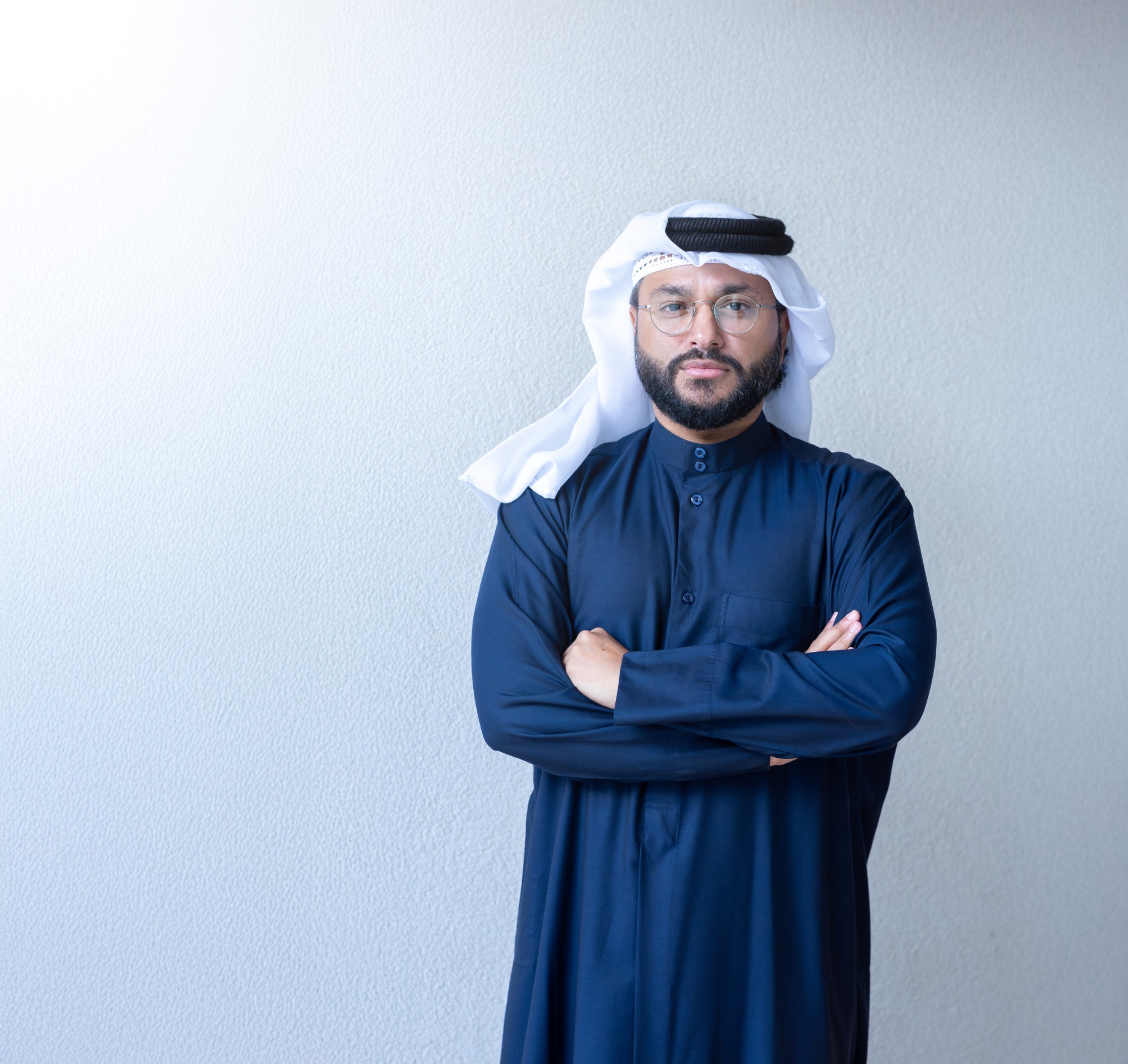
Design Doha 2026 is led by Director Fahad Al Obaidly.
Design Doha 2026 is led by Director Fahad Al Obaidly, with Glenn Adamson as Artistic Director, guiding its curatorial vision and international dialogue.
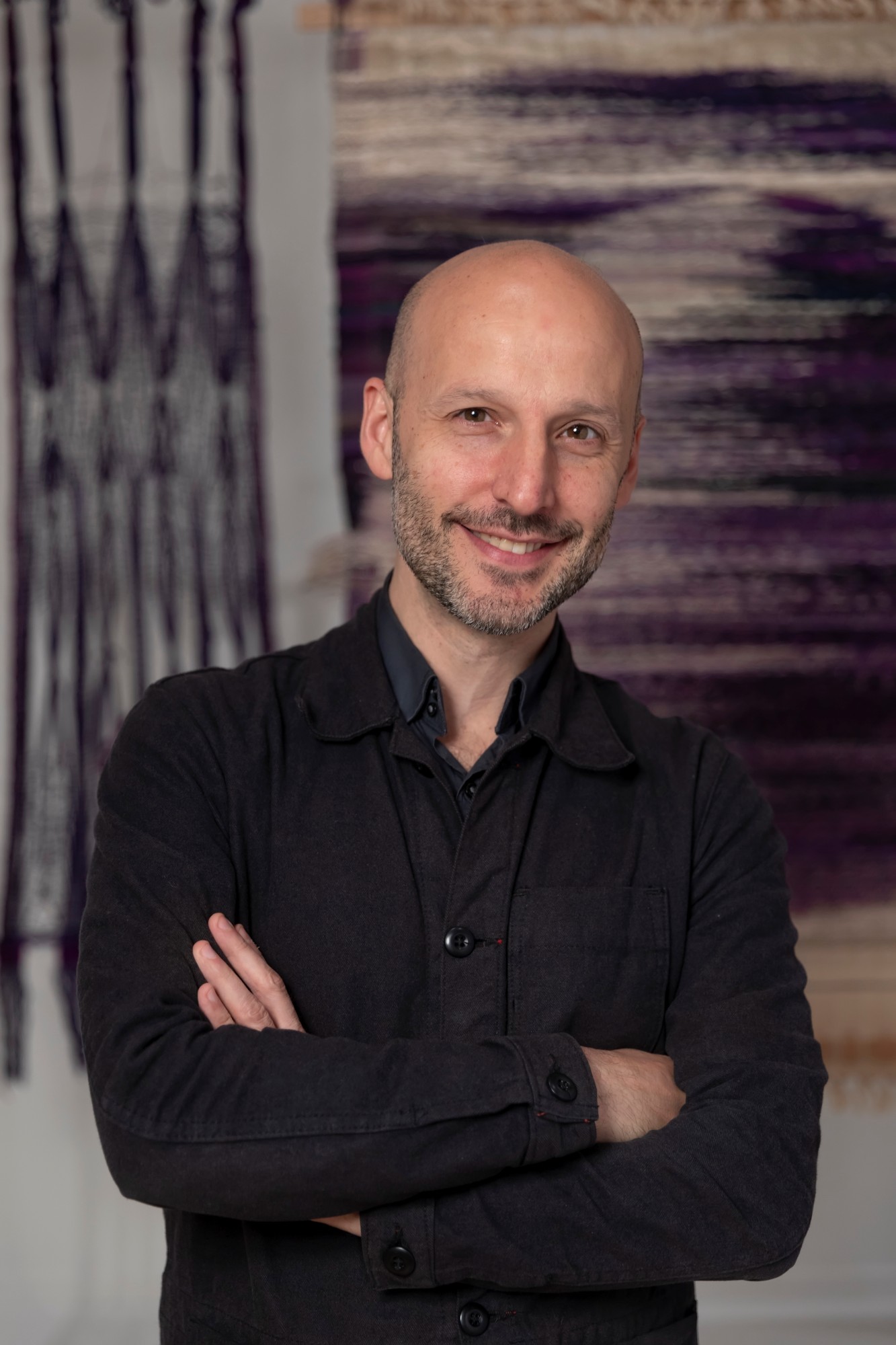
Glenn Adamson is the Artistic Director of Design Doha 2026
The ambition is to position Design Doha not merely as a place where finished objects are exhibited, but as an activator of spaces and a platform through which designers, makers, production networks, international experts and the public can meet.
“Design Doha 2026 marks the next chapter in the biennial’s evolution,” says Fahad Al Obaidly. “What began as a platform to map the design landscape of the MENASA region has developed into an institution that understands design as a system of knowledge shaped by language, landscape, ecology, craft, and the accumulated intelligence of generations.”
81 designers and five ways of looking at Arab design
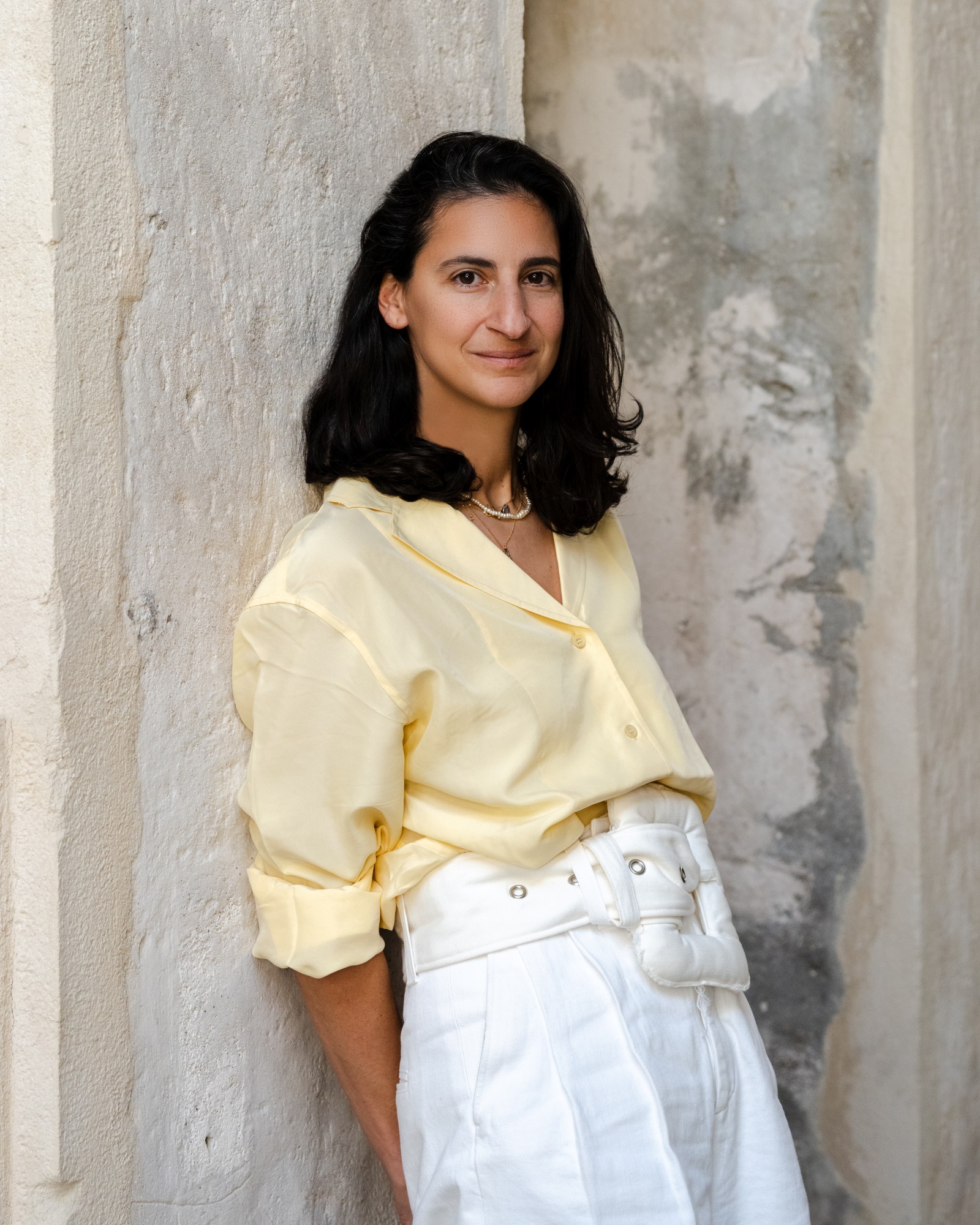
Noura Al Sayeh is the curator of Arab Design Now 2026.
At the heart of the biennial is Arab Design Now 2026, curated by Noura Al Sayeh.
The exhibition alone brings together 81 designers, artisans and makers, 78 new commissions and 15 films, with participants representing 27 countries, and more than 15 disciplines, from architecture, furniture and product design to craft, urbanism, sound, and social design.
Rather than separating design according to discipline, Noura Al Sayeh organises the exhibition through five thematic frameworks: Narration and Ornamentation; Land and Agrarian Practices; Landscapes of Production and Extraction; Crafts, Technology, and Community; and Belonging and Migrating.
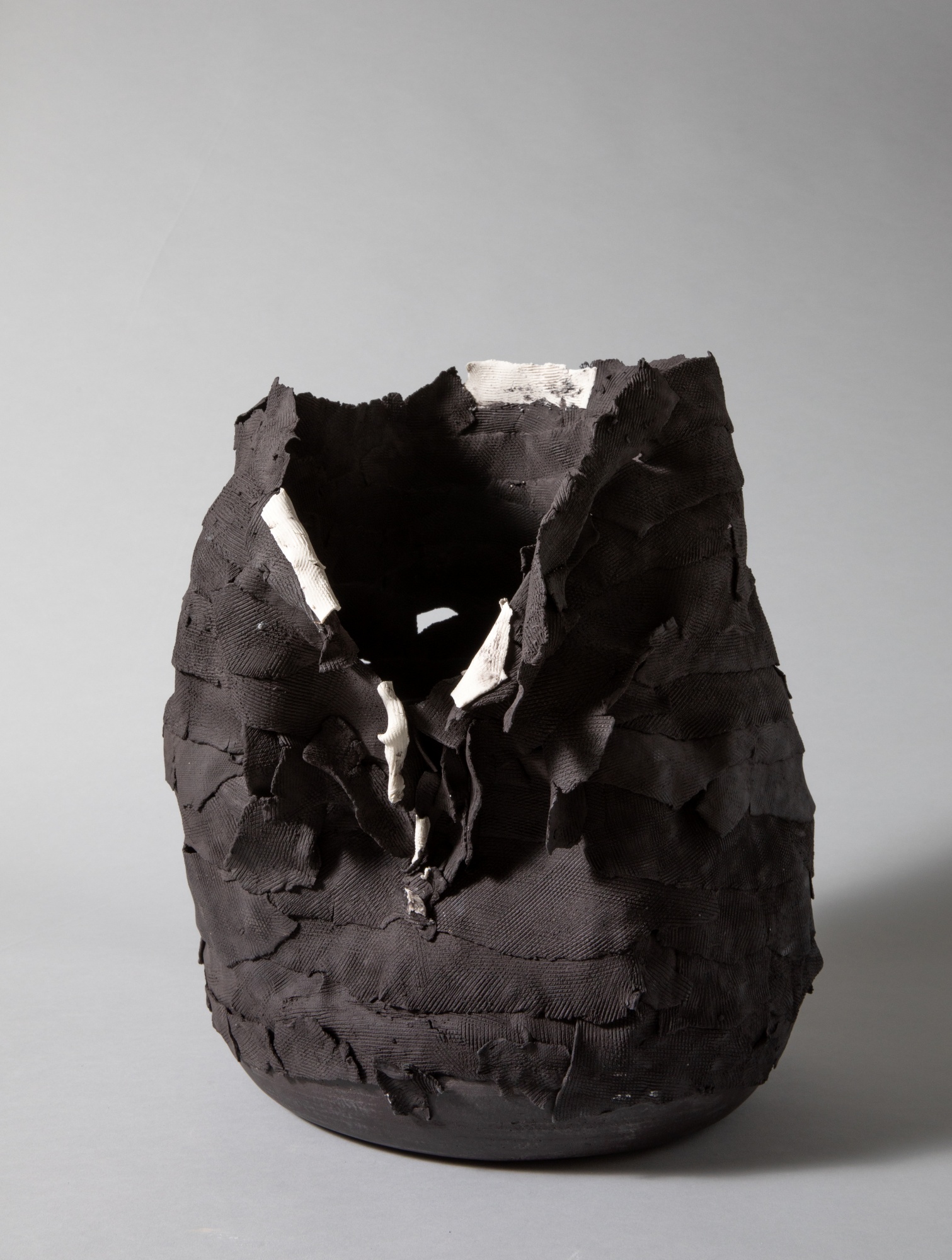
Needle Hole by Dima Al Tawil, part of "Arab Design Now" exhibition by Design Doha Biennial 2026.
The first, On Narration and Ornamentation, brings together Dima Srouji and Hooda Shawa, Shahira Fahmy Architects, Abdulrahman Al Muftah, Zoubida, Atelier Aziz Alqatami, Hassene Jeljeli, Selma Lazrak, Dar Arafa Architecture, Ahmed Angawi, Mehdi Dakhli, Hind Al Saad, Talin Hazbar, Tarek Shamma, Roham Shamekh, Faissal El-Malak, Shaikha Al Sulaiti and Imane Mellah.
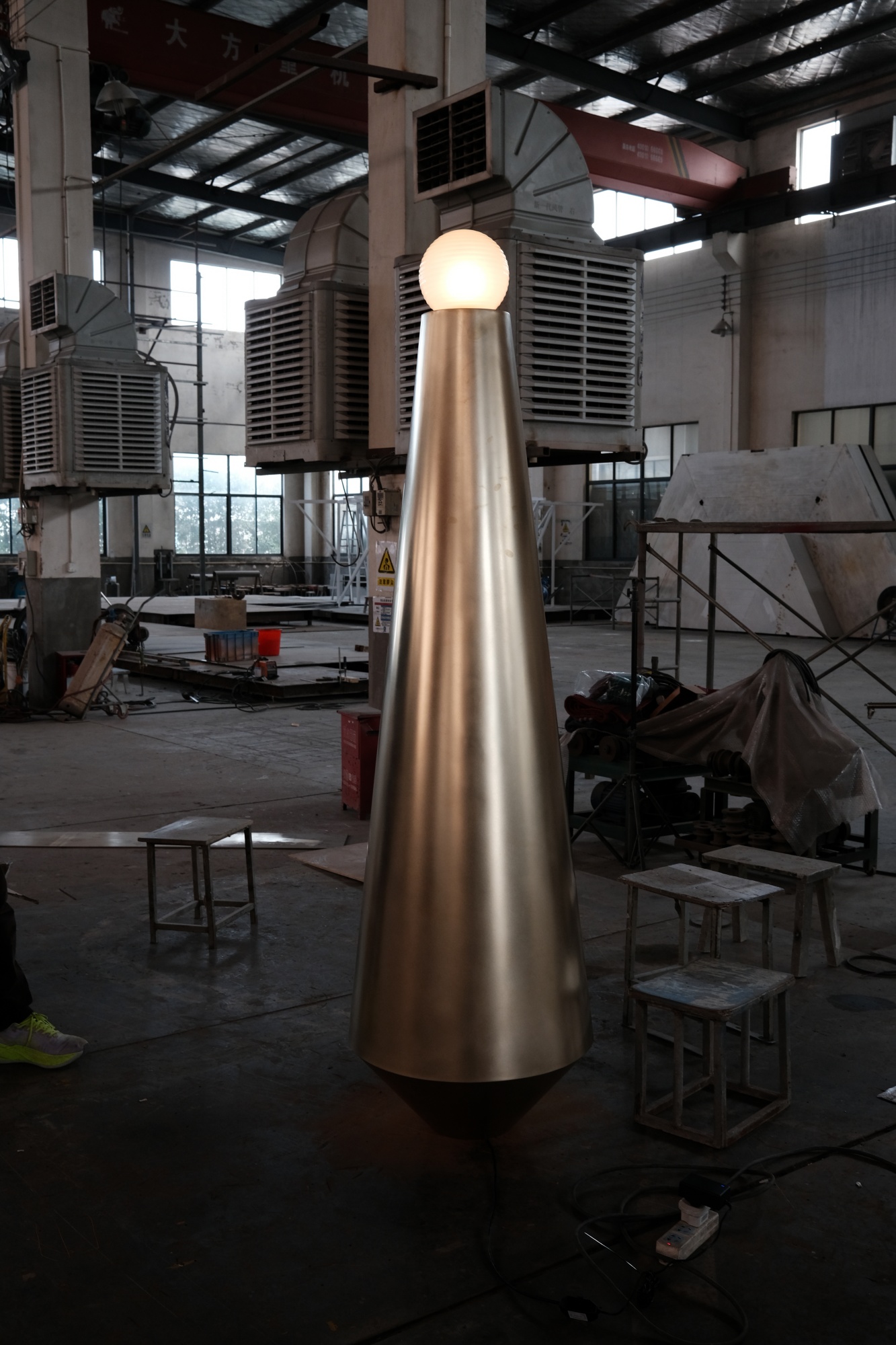
Detail shot of the custom-moulded glass diffuser by Al Taqadum, part of "Arab Design Now" exhibition by Design Doha Biennial 2026.
On Land: Agrarian Practices includes Aziza Chaouni Projects, Sakiya, Mirna Bamieh, Boo Design Studio, Local Industries + Studio Folder + Kazna Asker, MODEEN, Samer Selbak, Hall Haus, FADAA, IBKKI, Studio Aya Moug, Aya Haidar, Adrian Müller, Nuhayr Zein, Shepherd Studio + Abdulla Buhijji, Samah Hijawi and Studio Bazazo.
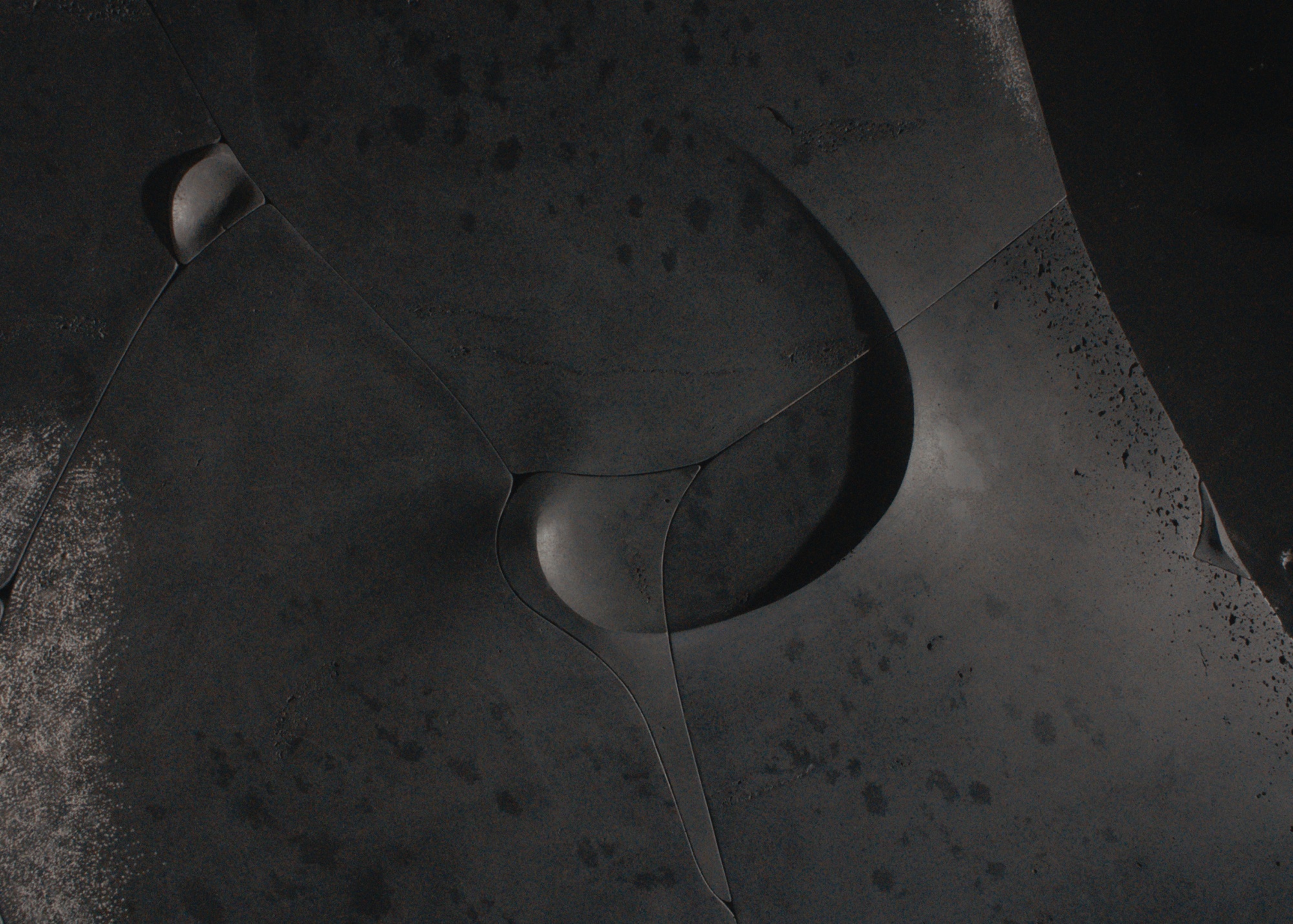
Volcanic stone table, by Shaha Raphael, part of "Arab Design Now" exhibition by Design Doha Biennial 2026.
Under Landscapes of Production, Landscapes of Extraction are Shaha Raphael, Ammar Kalo, Ammar Khammash, Twelve Degrees, Harness the Heat, Sama Al Saket, Karim + Elias, Material Cultures, Fatima Nickahdar, Omar Chakil, STUDIO-DA, KAMEH, Al Tqadum, Carl Gerges Architects, Mohamad Nahleh and Rana Haddad, Mohamed Amine Hamouda and India Mahdavi.
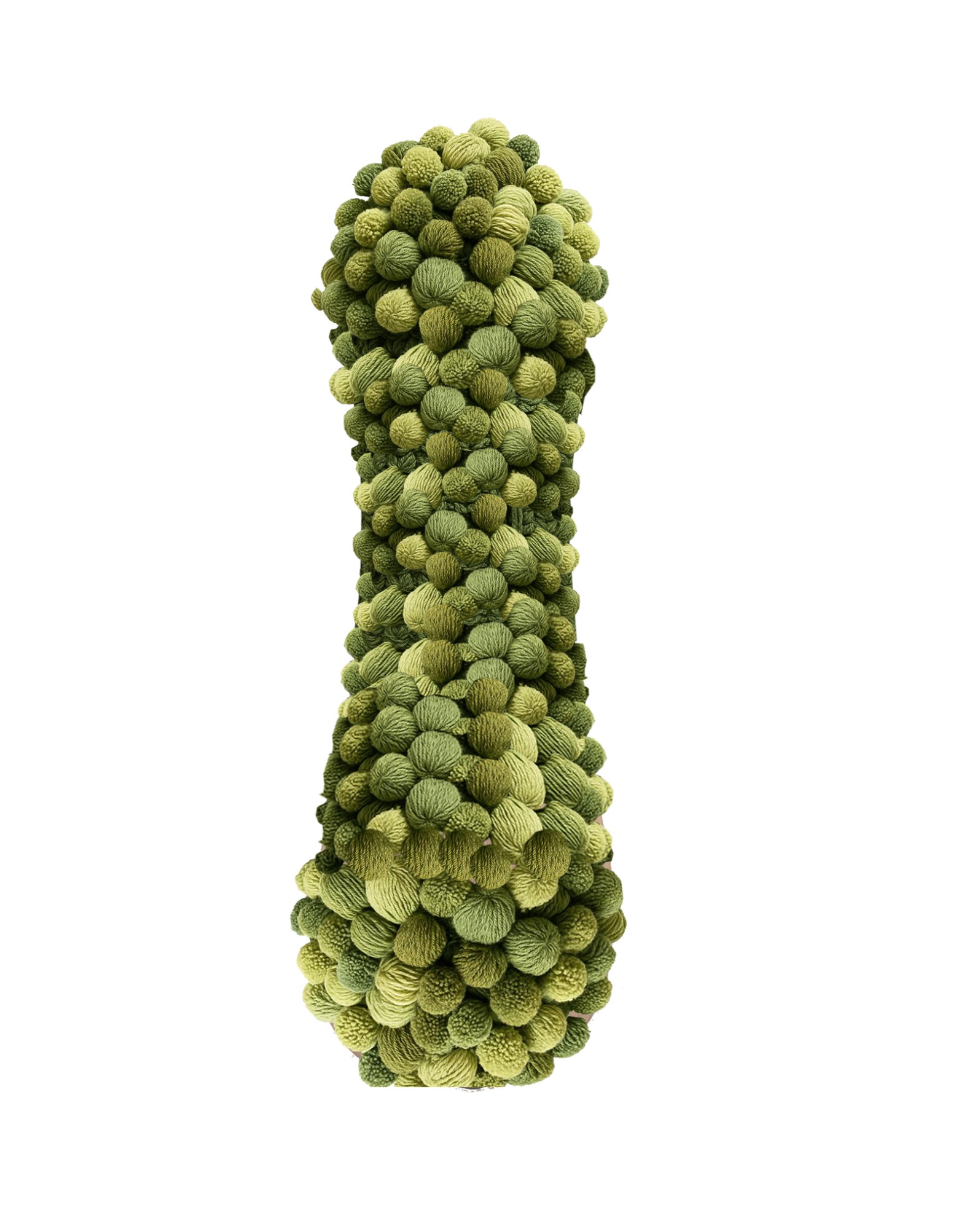
Visualisation of what a cupboard born of the inspiration of a flowering bloom rape might look like, by Tahir Sultan, part of "Arab Design Now" exhibition by Design Doha Biennial 2026.
Crafts, Technology, and Community brings together Tahir Sultan, Mhairi Boyle, Maryam Al Jomairi, Dima Al Tawil, Nourredine Amir, Victoria Dabdoub, Ayham Hassan, Zineb Kertane, Nathalie Khayat, Nada Al Mulla, Lobna Sana, Farah Abdelhamid, Ibbini Studio, Ola Saad Znad, Wesam Al Asali and Tamara Kalo.
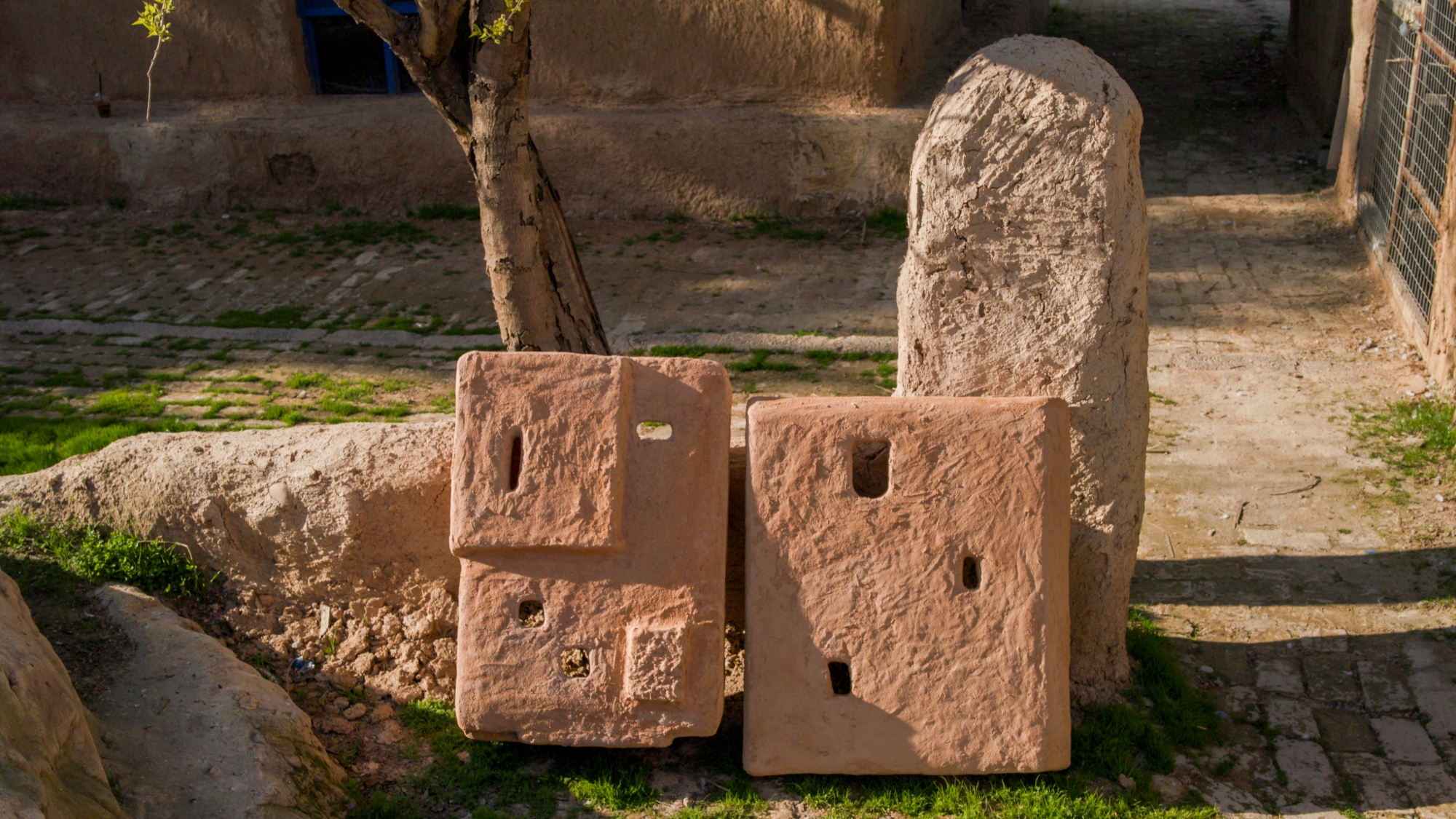
The Ground Remembers, by Maryam Turkey, part of "Arab Design Now" exhibition by Design Doha Biennial 2026.
The final strand, Belonging and Migrating, features Abdel El Tayeb, Studio Safar, Sarah Elawad, Maryam Turkey, Dina Satti, Ramdane Touhami, Rand Abdul Jabbar, Shireen Taweel, Architecture and Other Things, Aisha Al Suwaidi, Emii Alrai, Hussein Shikha and Yassine Ben Abdallah.
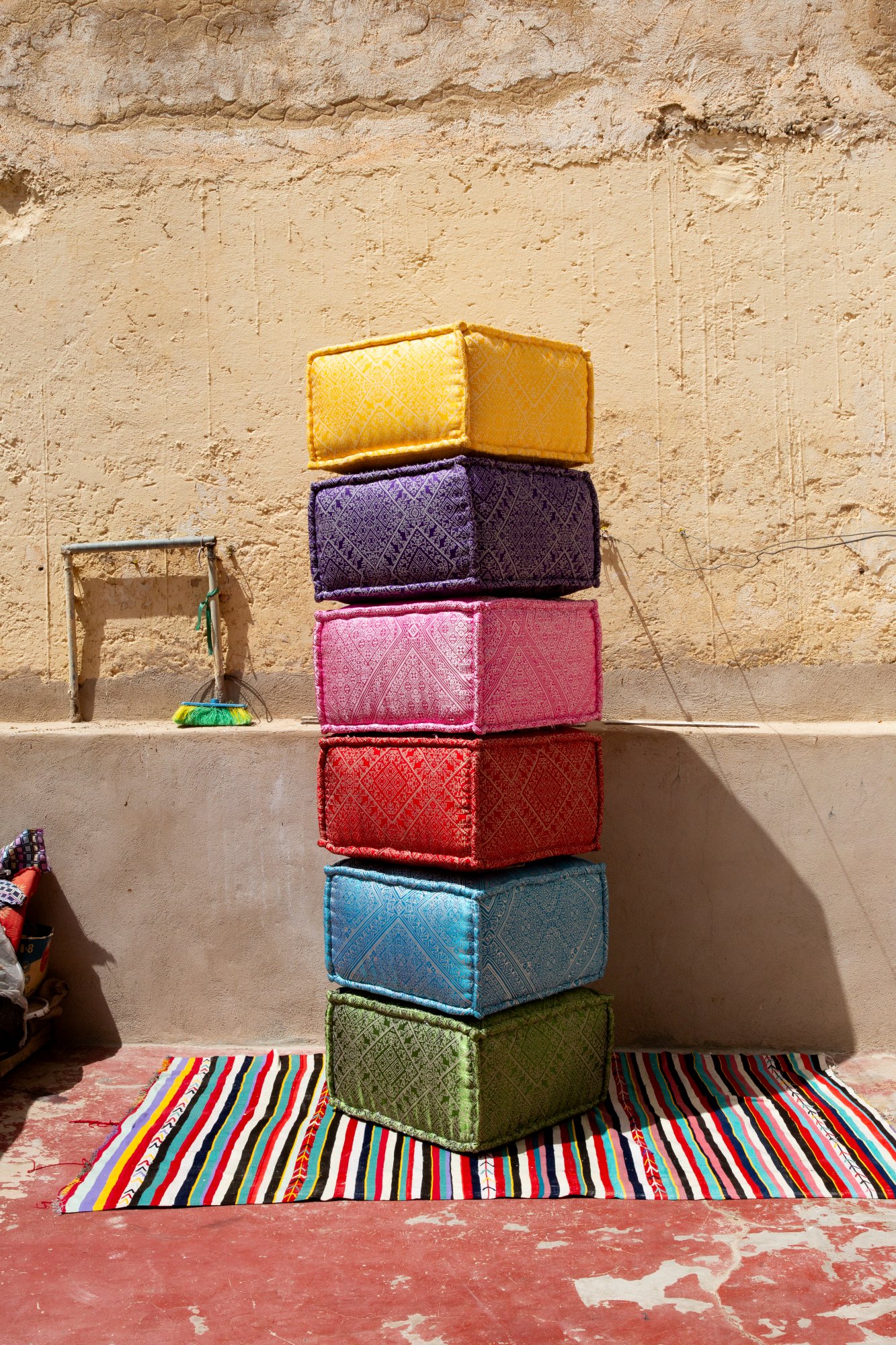
Sharing the same roof by Zoubida, part of "Arab Design Now" exhibition by Design Doha Biennial 2026. Photo by Osama Ahdi.
Across these groupings is a larger question that runs through much of Design Doha 2026: how are geography, material, technology, manufacturing, movement and social conditions changing the way design is produced in the region?
Craft as Testimony
That question continues beyond the headline exhibition.
Aslan’s Love Story, presented with Turquoise Mountain and curated by George Tadros, traces the life of Nabulsi tile artisan Jalal Aslan through craft, love, memory and loss. Four craft traditions are connected through the stages of a Palestinian wedding, with making positioned not as a means of neatly resolving the past, but as testimony to lives and cultures shaped by displacement and fragmentation.
Photography by Tarek Moukaddem. Courtesy of Tarek Moukaddem
Craft becomes participatory in The Thread That Binds, presented with TheLoveTriangle Collective and curated by Rana Rmeily. Based on Khous and Khaizaran weaving traditions using palm fronds and reeds, artisans and visitors will weave together throughout the exhibition. The installation consequently remains unfinished and changing, a living archive created through shared labour.
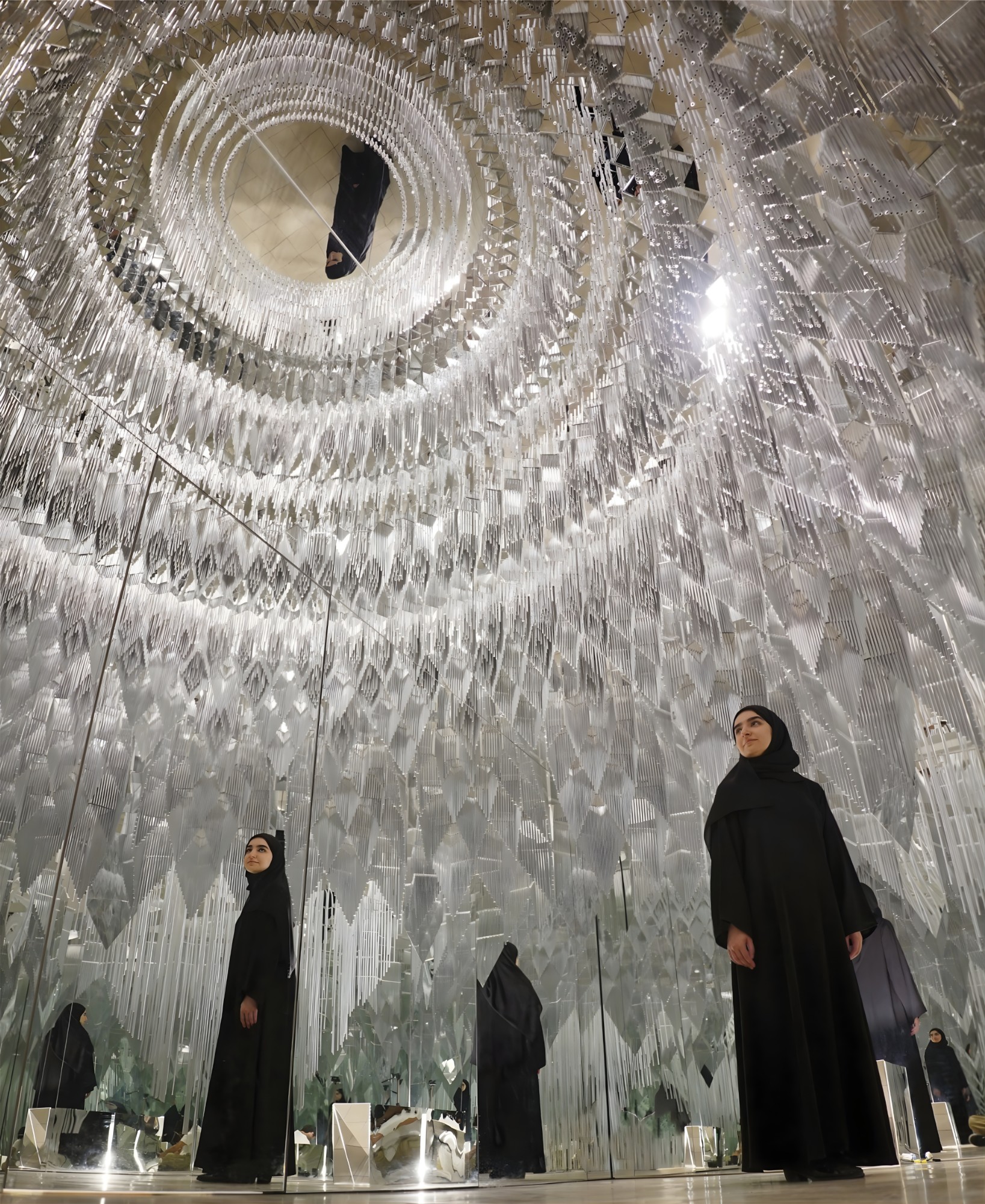
The Muqarnas of Sadu, Photographer: Dean Rossiter
The relationship between inherited craft and contemporary technology takes another form in The Muqarnas of Sadu. Presented with Al Sadu Society, artist Ghadeer Mohammed and curator Sahar Almuscati bring the two-dimensional language of Sadu weaving into dialogue with the three-dimensional geometry of Muqarnas architecture. Parametric modelling and aluminium construction translate traditional motifs into modular spatial elements that filter light and reflection.
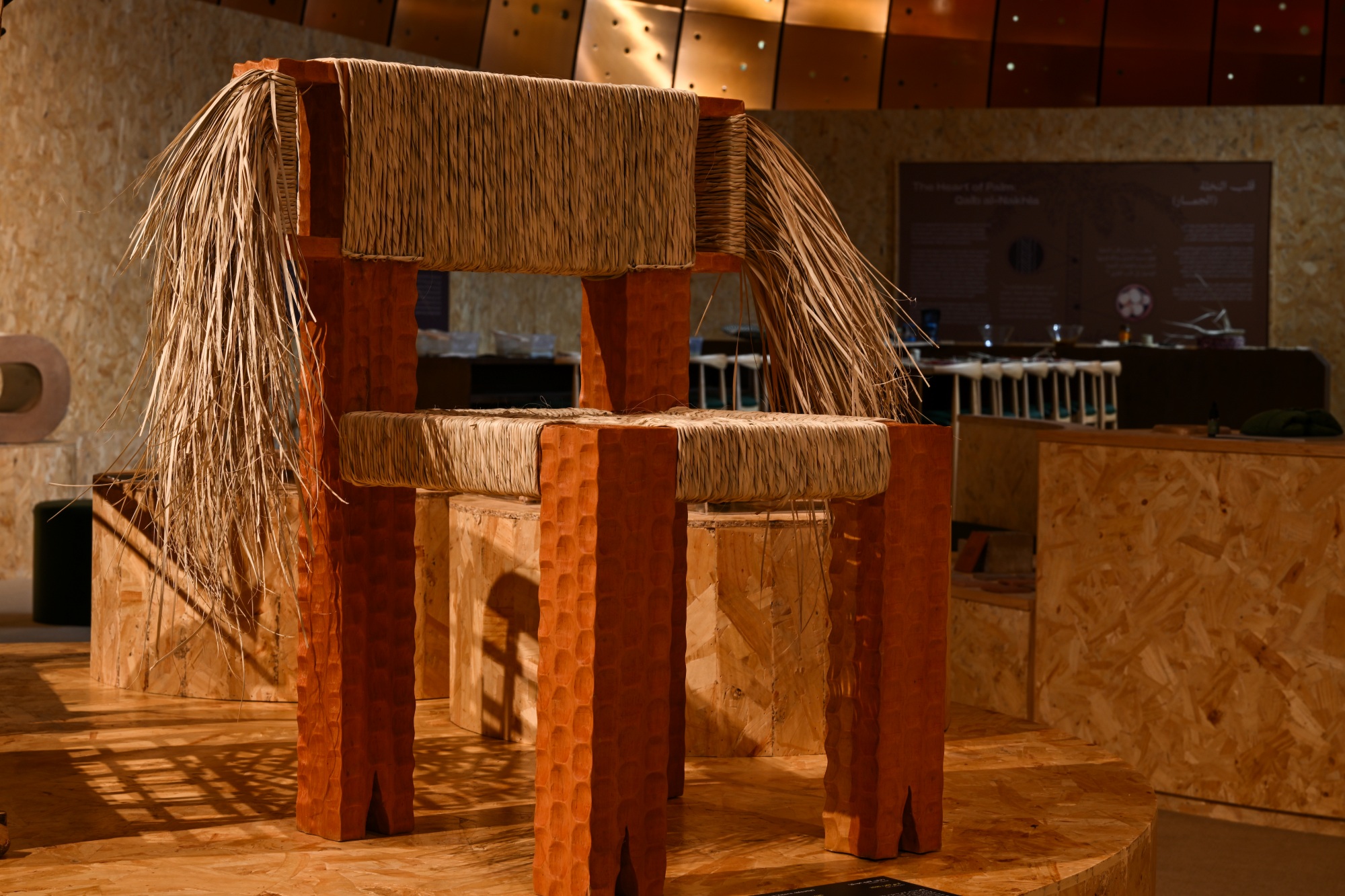
ITHRA_KHOOS INITIATIVE_Albaseqat_2025_Yasir Alqunais.jpg Baseqat Collection by Khoos Initiative, presented by Ithra (King Abdulaziz Centre for World Culture), for Design Doha Biennial 2026.
At Ithra's Design from Oasis, meanwhile, the date palm becomes both material and cultural reference. Drawing from the Al Khoos Initiative, the exhibition considers palm weaving as a living practice connecting ecological knowledge, place, community and contemporary design.
What happens after oil?
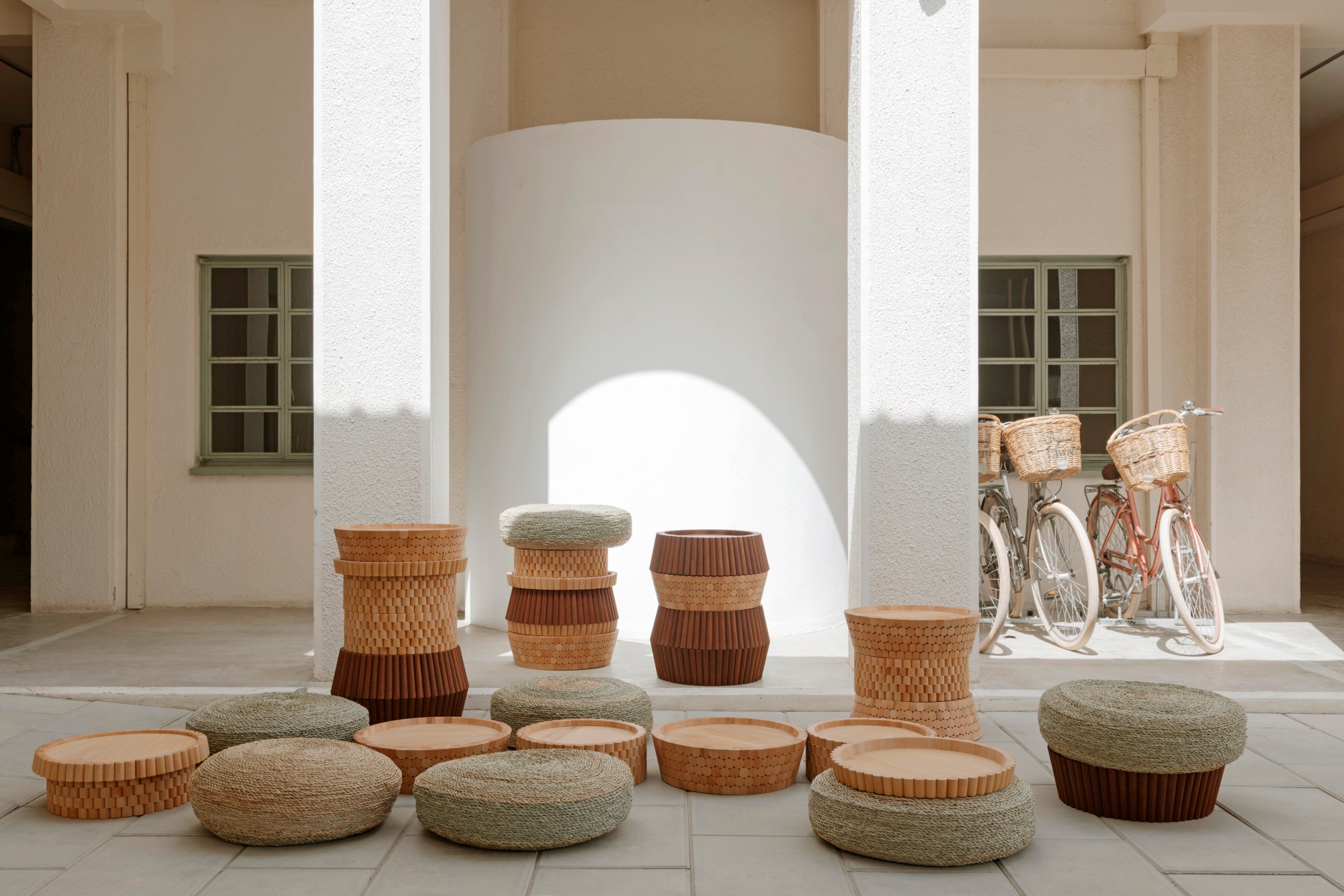
Rooted in Warmth by Raghad Al Ahmad, presented by Ithra (King Abdulaziz Center for World Culture), for Design Doha Biennial 2026.
Material also becomes a way of reading the profound transformations of the Gulf.
Post-Oil 2026, presented by Saudi Modern Initiative and curated by Turki and Abdulrahman Gazzaz, examines five materials that transformed Saudi Arabia and the GCC during the oil boom: glass, concrete, steel, aluminium and asphalt.
Through art and design investigations, the exhibition considers the consequences of industrialisation on urban form, construction logic, political approaches and cultural perception, and the way new economies became physically embedded within the region's built environment.
Elsewhere, an object far more ordinary becomes monumental.
Monumental: A Monobloc’s Memoir, presented and curated by Houhou, looks at the ubiquitous plastic Monobloc chair and the particular place it has occupied within collectivistic Arab culture. Surreal sculptural reinterpretations enlarge the familiar chair to architectural proportions, transforming one of the most anonymous objects of everyday life into a cultural archive and contemporary monument.
Design Across Generations
Liwan Residency Exhibition: BU’ED NADHAR by Liwan Design Studios and Labs, for Design Doha Biennial 2026.
At Liwan Design Studios and Labs, BU’ED NADHAR: Beyond Immediate Vision, directed and curated by Aisha Nasser Al Sowaidi, brings together 27 works developed through five residencies and collaborative experiments involving 21 artists from the Gulf and neighbouring regions.
Its Arabic title translates as “beyond immediate vision”, fitting an exhibition that asks design to move between memory and possibility. Material knowledge and cultural continuity become ways of thinking about the future without severing it from the past.
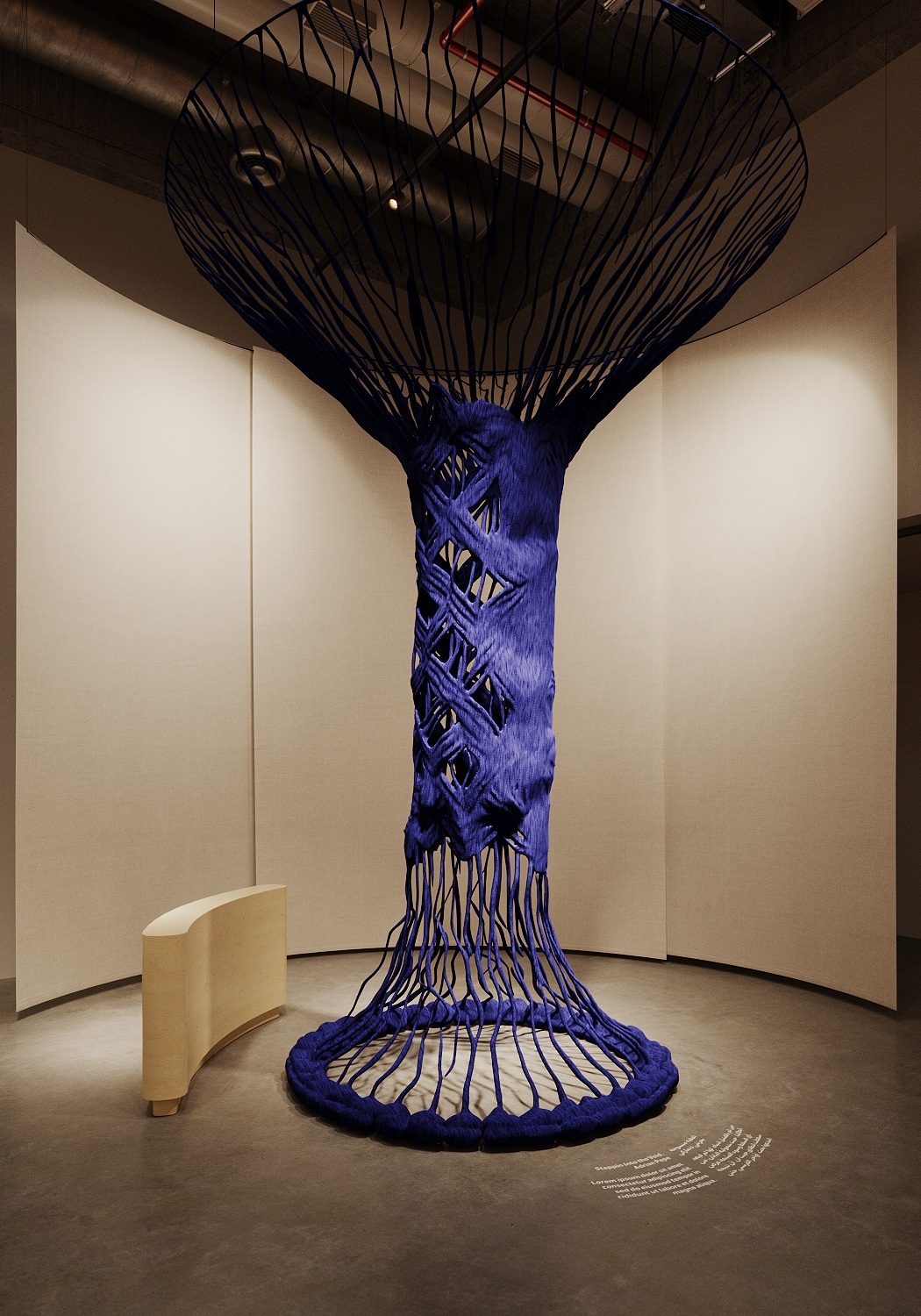
Irthi Contemporary Crafts Council_DesignLabsII.jpg DesignLabs II by Irthi Contemporary Crafts Council, for Design Doha Biennial 2026.
Irthi Contemporary Crafts Council takes another collaborative approach in Design Labs II. Curated by Reem Saif Al Mazrouei, the exhibition grows from Irthi's Architecture of Culture publication, with artisans working alongside regional and international designers to transform nine recipes into installations and furniture. The artisan here is not simply a maker executing somebody else's design, but a cultural co-author.
Letters Become Spaces
Typography also leaves the page.
Beyond The Letters, presented with TypeAraby and curated by Ali Asali and Basma Hamdy, approaches Arabic and Persian typography as systems of knowledge shaped by spirituality, geography and embodied practice.
Through installations, textiles, sculpture and participatory formats, letterforms expand into spatial and material environments. Ancestral calligraphic practices are placed in conversation with contemporary technologies, including generative systems and artificial intelligence.
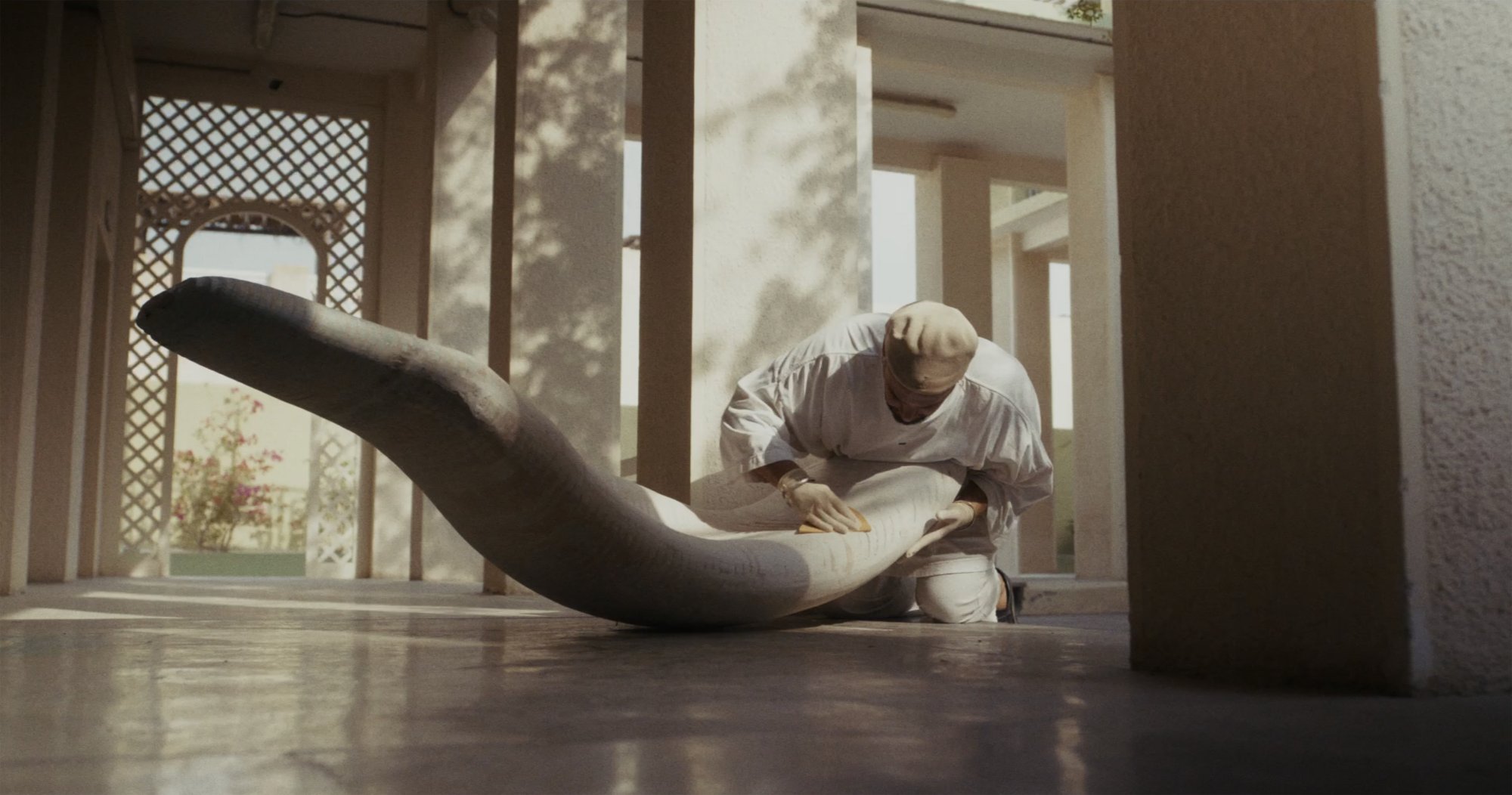
INTERLACED: Dialogues in Design by FROMM. for Design Doha Biennial 2026.
The movement of ideas across cultures is similarly central to INTERLACED: Dialogues in Design, presented by FROMM. and curated by Etienne Bastormagi.
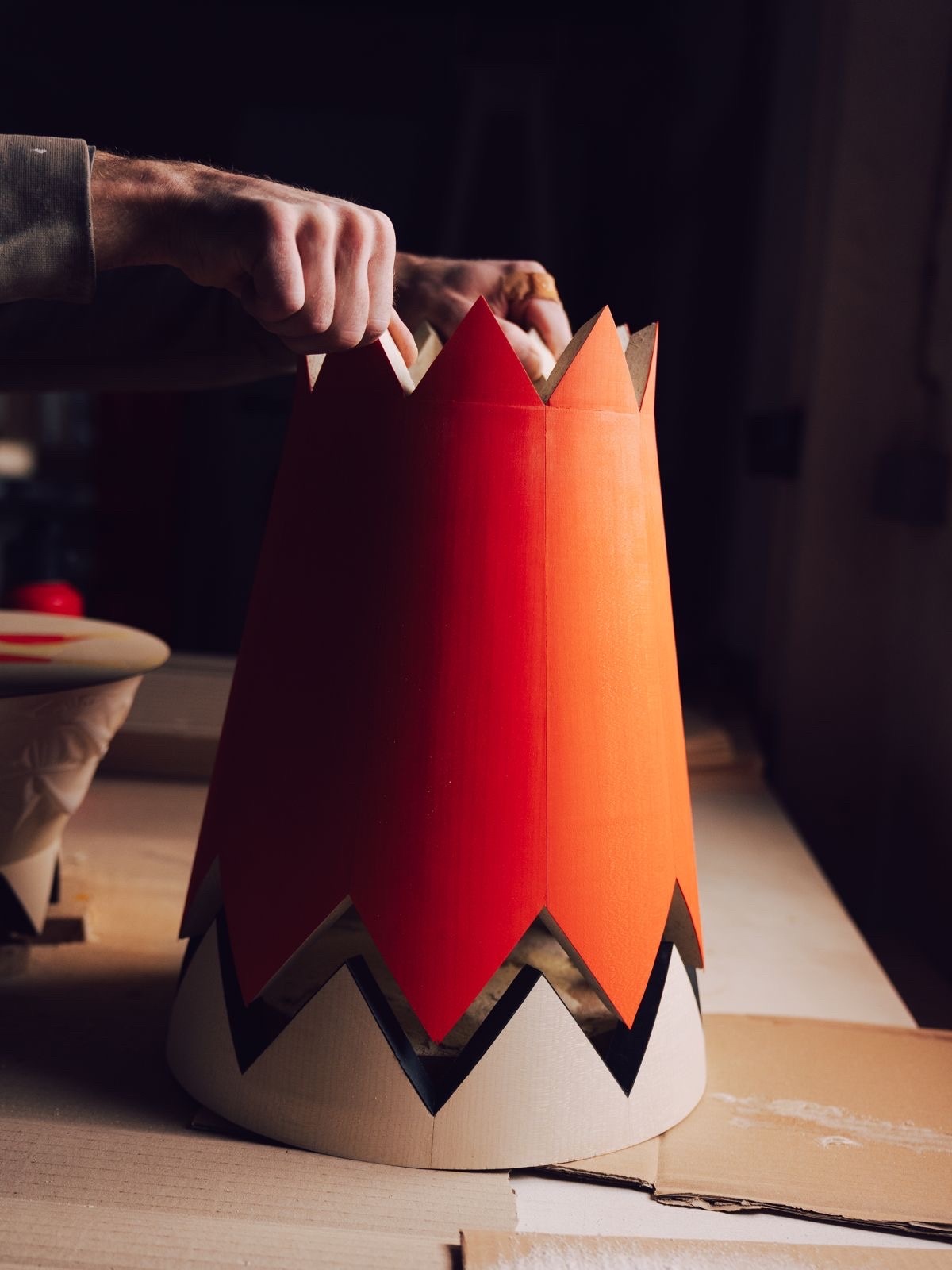
INTERLACED: Dialogues in Design by FROMM. for Design Doha Biennial 2026.
Furniture and objects become points of encounter between Arab heritage and contemporary global practice, reflecting the region's historic role as a crossroads for trade, making and the circulation of craft.
When Heritage Migrates
Migration is addressed more literally in several exhibitions.
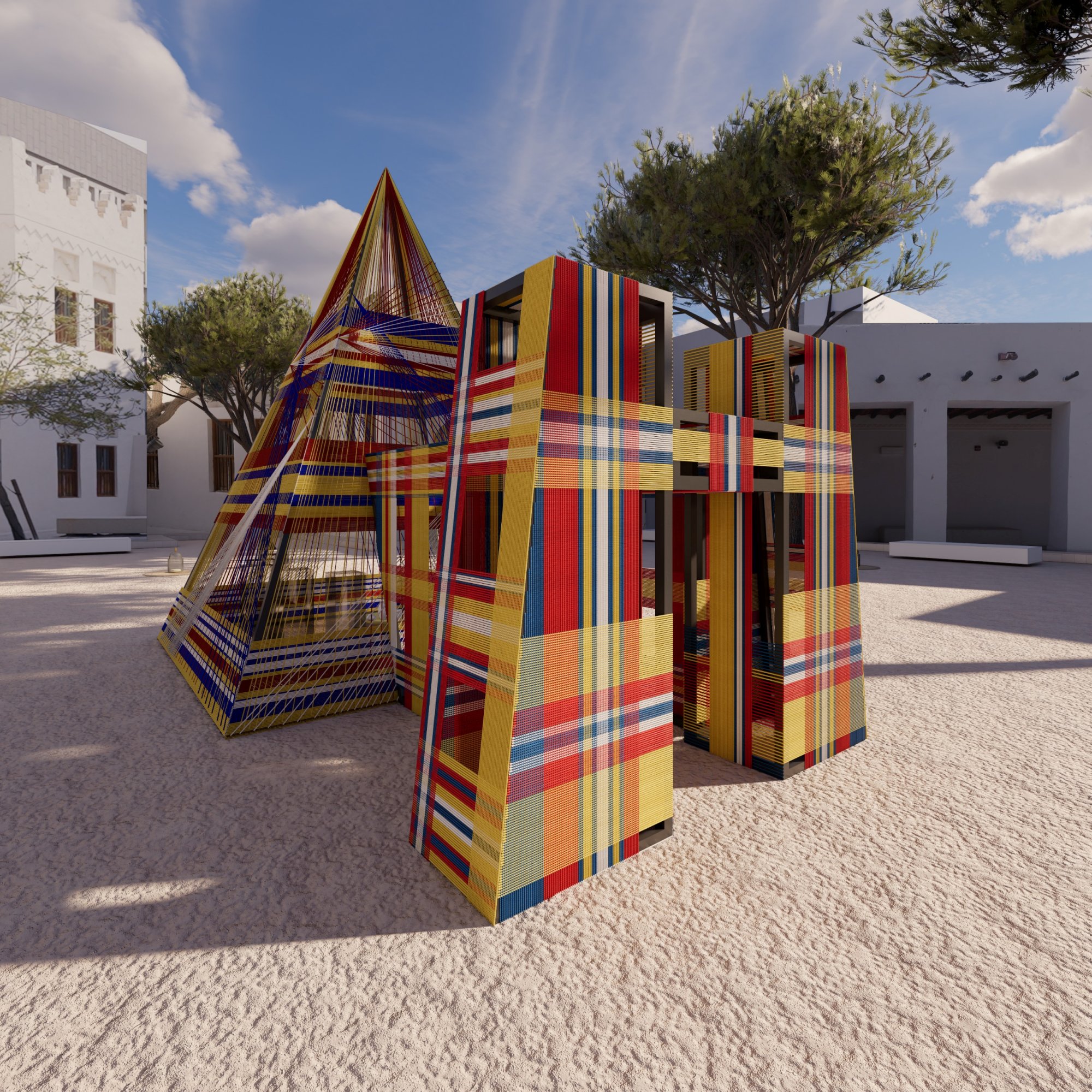
Threading the Ceremony by StudioDesignLO, for Design Doha Biennial 2026.
Threading the Ceremony, presented by Studio Design LO and curated by Ester Lipsch and Lubna Osman, begins with the Sudanese Jirtig marriage ritual. A Nubian pyramid covered in woven Firka fabric creates the architectural setting for objects associated with marriage rites. The cloth itself becomes a metaphor for memory under strain—caught between continuity and disruption.
Migrating Heritage, presented by the Ministry of Culture of the Republic of Azerbaijan and Azerbaijan National Carpet Museum and curated by Konul Rafiyeva, looks at how textile knowledge travels between generations, media and communities. The Azerbaijani nomadic object məfrəs becomes the starting point for a conversation between historic woven objects and contemporary design and media practices, examining textiles as carriers of memory, ecological intelligence and cultural knowledge.
Textile storytelling continues with From Fable to Fibre: The Kalila wa Dimna Triptych. Presented by Iwan Maktabi and curated by Louis Barthélemy in collaboration with Iwan Maktabi, the exhibition takes the animal fables of Kalila wa Dimna, translated into Arabic in the eighth century, and reinterprets them through three hand-knotted works in wool and silk. Traditional craftsmanship meets a contemporary visual language to create narrative objects suspended between past and present, East and West.
Doha, Light and Process
Some exhibitions look closer to their immediate environment.
Traces of the Desert Light, presented by SANAE and curated by Tine De Beck, explores the relationship between material, architecture and Doha's distinctive luminosity.
Collaborative works by Morevi x Majdulin Nasrallah, Moss Studio × Josef Gereige, Ayse Habibe Kucuk, and Studio Khachatryan x Shaikha Al-Sulaiti x Ángela Ramos Garcés place tactility and dialogue at the centre of craft.
MODEEN's Light & Process, curated by Andia Modeen, takes visitors behind the finished object. More than a decade of development of the studio's luminary objects is revealed through sketches, prototypes and experiments, tracing the journey from ideation to production and the continuing negotiation between handmade craft and contemporary technologies.
Mexico meets Qatar
Design Doha's geographic conversation extends further in 2026 through Qatar's Years of Culture programme.
Presented in partnership with Qatar Canada Mexico 2026 Year of Culture, The Sower will be Mexico-based designer Fernando Laposse's first exhibition in the MENA region.
Curated by Mario Ballesteros, the exhibition draws on Laposse's 15 years of working with rural communities and connects Mexico and Qatar through their desert ecologies and histories of trade. New works consider cultivation, memory, community and environmental responsibility, with a living seed bank at the centre of the exhibition.
The project proposes a particularly resonant idea for a design biennial: “design as cultivation and farming as culture.”
Taking design outside
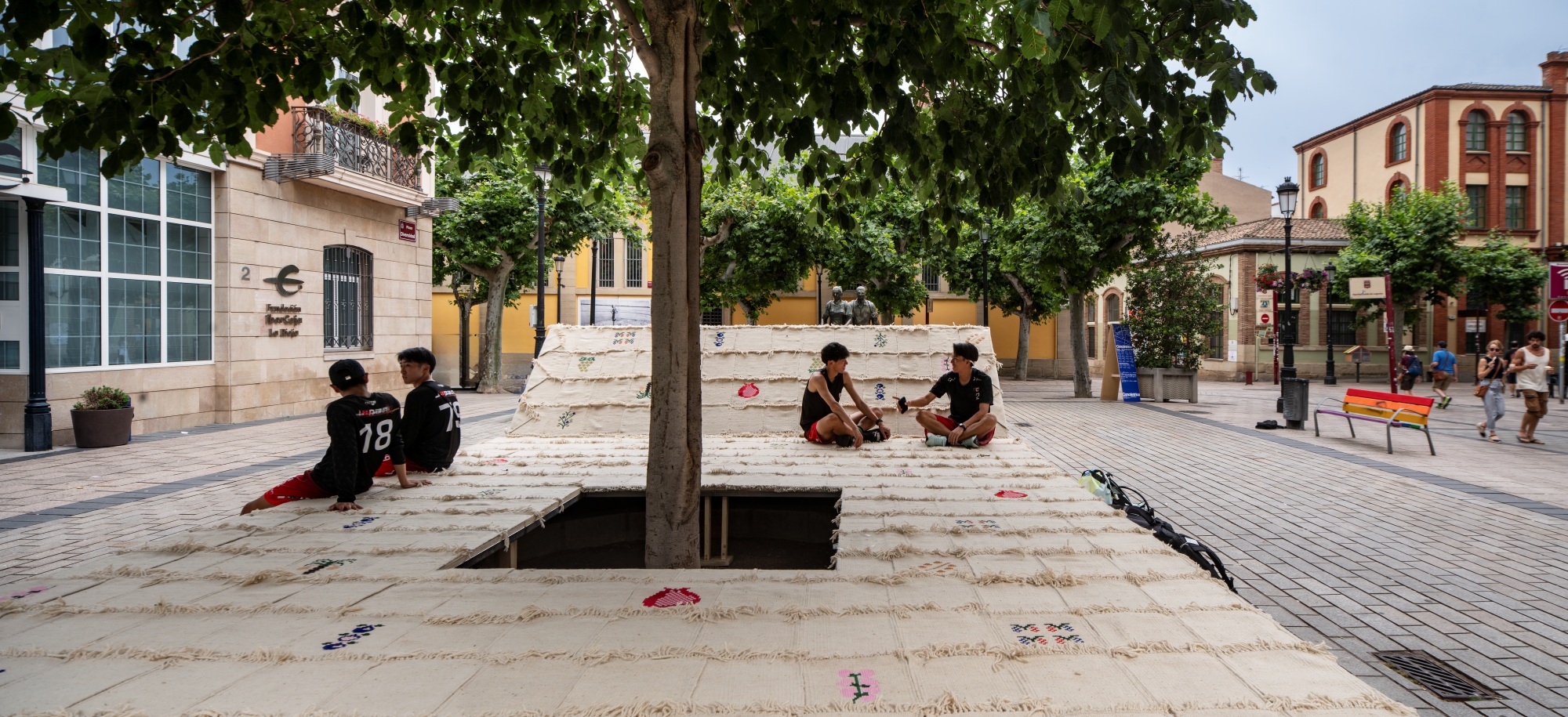
One of the most significant additions to the second edition is the launch of Public Design Commissions, curated by Javier Peña Ibáñez, Director of Concéntrico, the International Festival of Design and Architecture in Logroño, Spain.
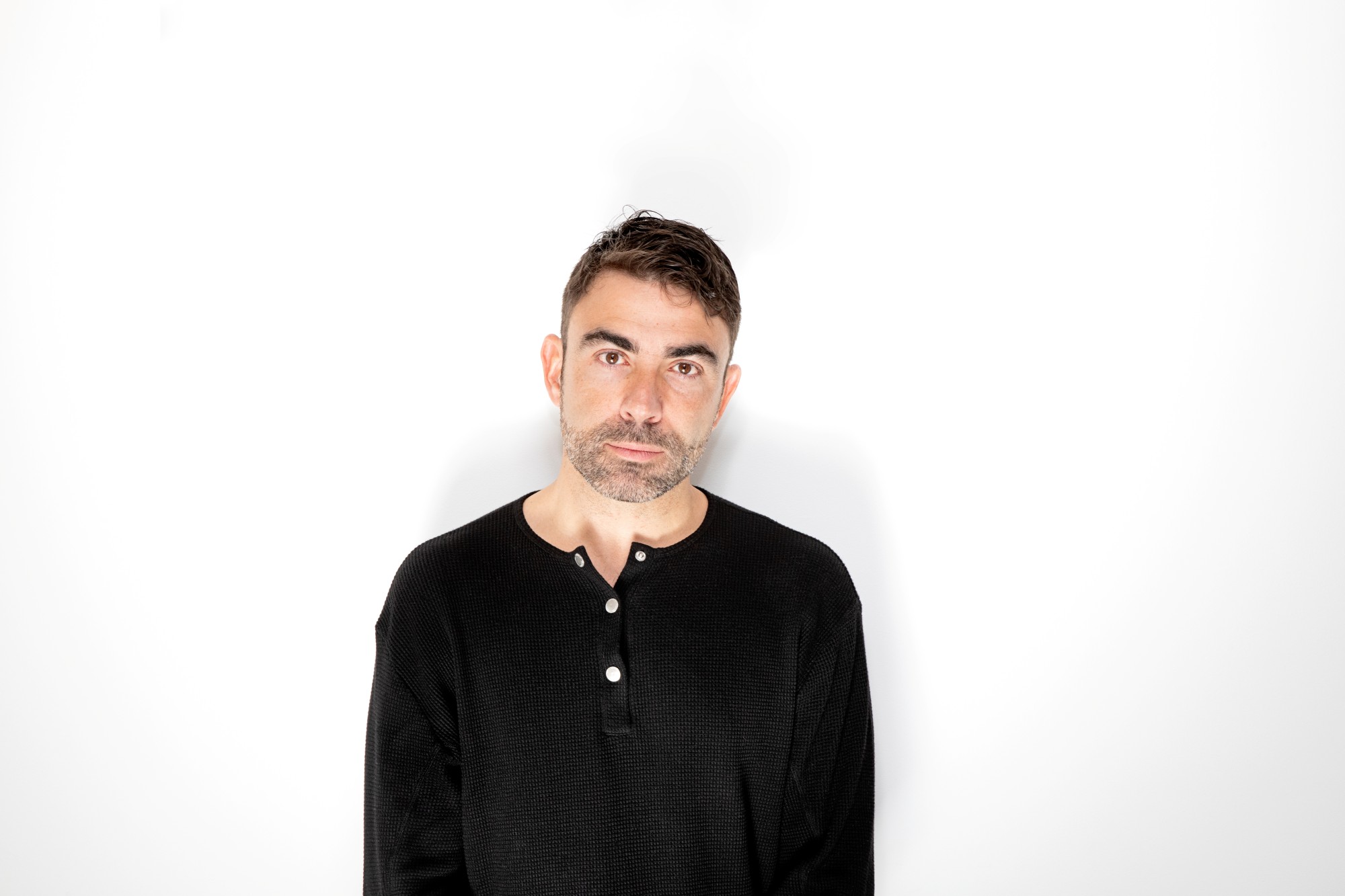
Public Design Commissions, curated by Javier Peña Ibáñez, Director of Concéntrico, the International Festival of Design and Architecture in Logroño, Spain
An open call across MENASA selected ten designers, architects and urban practitioners to rethink public spaces across Qatar. In the programme's first stage, five winning proposals will be realised as context-responsive installations across Doha, exploring architecture, craft, sustainability and cultural identity.
The intention is to move design beyond the temporary exhibition and into spaces used by the public, testing whether a biennial can leave behind something more substantial than an event.
The Design Doha Prize returns
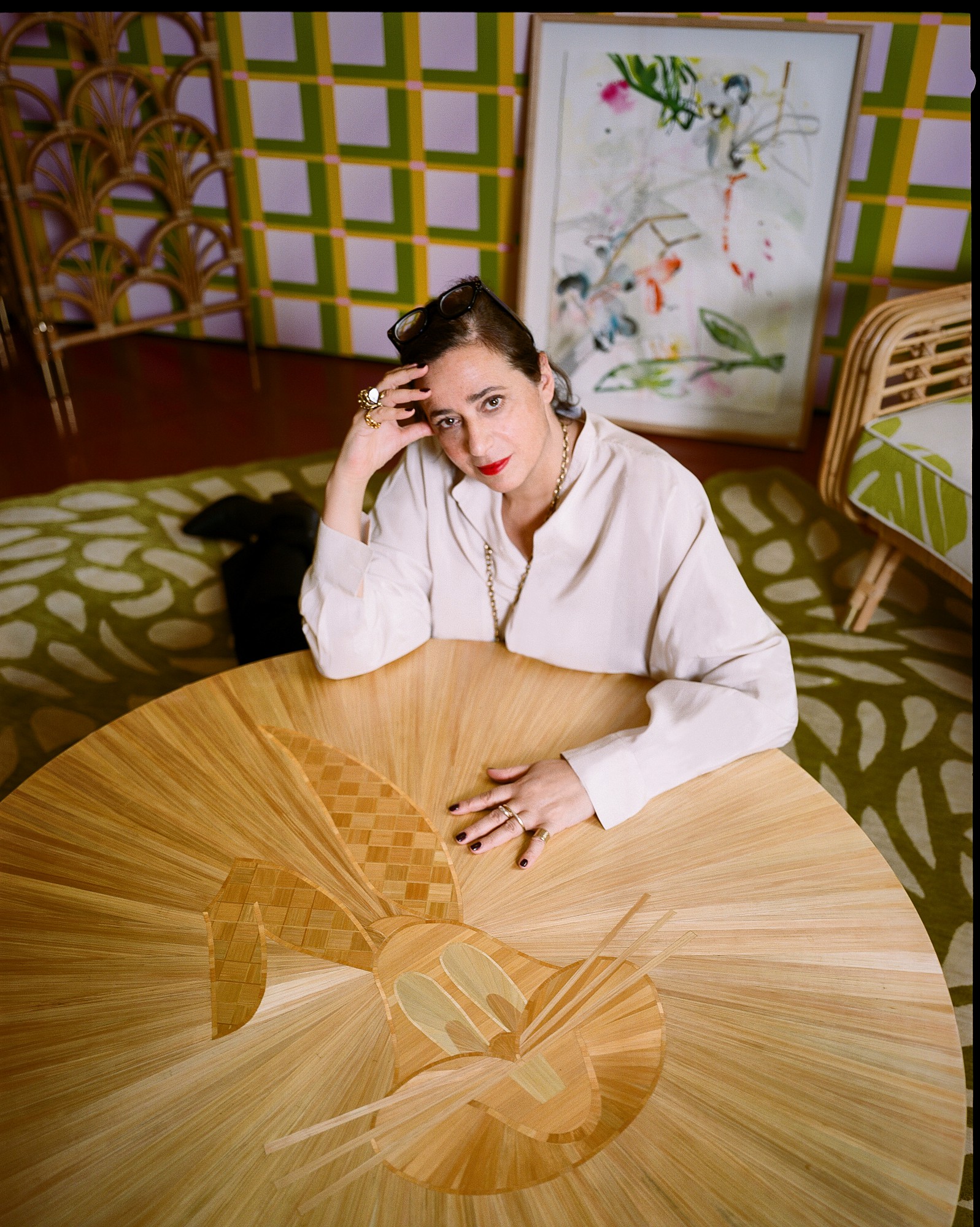
Iranian-French architect and designer India Mahdavi heads the international jury of the Design Doha Prize
Design Doha's investment in emerging and established regional talent also continues through the Design Doha Prize, returning in four categories: Craft, Product Design, Furniture Design and Emerging Talent.
The Prize is chaired by H.E. Sheikha Al Mayassa bint Hamad bin Khalifa Al Thani, with a 24-member international jury headed by Iranian-French architect and designer India Mahdavi.
The four winners will be announced on 7 November during the biennial's opening week. Together, they will receive QAR 800,000 in funding as well as mentorship and opportunities to develop, exhibit and expand the reach of their work.
Two major bilingual publications will also emerge from this edition, one devoted to Arab Design Now 2026* and another documenting the biennial as a whole, while talks, workshops and networking platforms will run alongside the exhibitions.
For Artistic Director Glenn Adamson, this widening field of participation is fundamental to the second edition.
“Design Doha 2026 expands both the biennial’s scope and international reach,” he says. “This edition illuminates a constellation of voices across the MENASA region and beyond, demonstrating how design operates through dialogue and exchange.”
Perhaps that is where the real evolution of Design Doha lies.